Updated kubevirt docs #2318
Updated kubevirt docs #2318
Conversation


|
@davidvossel could you take a look? |

✅ Deploy Preview for hypershift-docs ready!
To edit notification comments on pull requests, go to your Netlify site settings. |

|
@mvazquezc: The label(s) DetailsIn response to this:
Instructions for interacting with me using PR comments are available here. If you have questions or suggestions related to my behavior, please file an issue against the kubernetes/test-infra repository. |
 mvazquezc
force-pushed
the
updated-kv-docs
branch
2 times, most recently
from
mvazquezc
force-pushed
the
updated-kv-docs
branch
2 times, most recently
from
1e12240 to
d39a0b8
Compare

| --memory $MEM \ | ||
| --cores $CPU | ||
| --cores $CPU \ | ||
| #--release-image quay.io/openshift-release-dev/ocp-release:$OCP_RELEASE \ |
There was a problem hiding this comment.
i'd rather omit the release-image from the example command. we want hypershift cli to pick the best default for us. if someone is using the latest hypershift operator, the default will be accurate
There was a problem hiding this comment.
I will remove it and add a note stating that this flag could be used to provision the cluster with a specific OCP release. Let me know if this is good enough or if we want to completely omit this information.
From my point of view I see it useful in terms of testing, let's say that you're running a hypershift version that supports deploying from 4.11 to 4.13 hosted clusters. Being able to specify a given release may be helpful when troubleshooting issues / reproducing a bug / testing something in a specific release / etc.
| # You may want to run this instead | ||
| hypershift install --hypershift-image quay.io/hypershift/hypershift-operator:4.12 |
There was a problem hiding this comment.
i think this has the potential to lead to more confusion. if someone uses a hypershift operator pinned to a specific release (and not the latest one) then we have to start talking about release payload versioning and other stuff, which isn't well defined at the moment. i'd rather we stick to defaults for the documentation examples.
There was a problem hiding this comment.
Got it, will remove that from the doc.
| In order for the hosted cluster to complete its deployment, we need to fix the Ingress, we will do that in the next sections. | ||
|
|
There was a problem hiding this comment.
the default settings are meant to avoid people needing to consider ingress
There was a problem hiding this comment.
Okay, will reorganize the document so the default example doesn't require ingress.
| export MEM="6Gi" | ||
| export CPU="2" | ||
| export WORKER_COUNT="2" | ||
| export BASE_DOMAIN=hypershift.lab |
There was a problem hiding this comment.
we don't want to specify a basedomain by default. that's the advanced case that requires someone to setup DNS entries
| 4. Create a ClusterIP service and a OCP Route in the management cluster for providing ingress to the hosted cluster (One limitation is that we can only expose one of the router ports, in this case we will expose the https one.) | ||
| ```shell | ||
| export HTTPS_NODEPORT=$(oc --kubeconfig $CLUSTER_NAME-kubeconfig get services -n openshift-ingress router-nodeport-default -o jsonpath='{.spec.ports[?(@.name=="https")].nodePort}') | ||
| cat << EOF | oc apply -f - | ||
| apiVersion: v1 | ||
| kind: Service | ||
| metadata: | ||
| labels: | ||
| app: $CLUSTER_NAME | ||
| name: $CLUSTER_NAME-apps | ||
| namespace: clusters-$CLUSTER_NAME | ||
| spec: | ||
| ports: | ||
| - name: https-443 | ||
| port: 443 | ||
| protocol: TCP | ||
| targetPort: ${HTTPS_NODEPORT} | ||
| selector: | ||
| kubevirt.io: virt-launcher | ||
| type: ClusterIP | ||
| EOF | ||
| cat << EOF | oc apply -f - | ||
| apiVersion: route.openshift.io/v1 | ||
| kind: Route | ||
| metadata: | ||
| name: $CLUSTER_NAME-443 | ||
| namespace: clusters-$CLUSTER_NAME | ||
| spec: | ||
| host: data.apps.$CLUSTER_NAME.$BASE_DOMAIN | ||
| wildcardPolicy: Subdomain | ||
| tls: | ||
| termination: passthrough | ||
| insecureEdgeTerminationPolicy: Redirect | ||
| port: | ||
| targetPort: https-443 | ||
| to: | ||
| kind: Service | ||
| name: $CLUSTER_NAME-apps | ||
| weight: 100 | ||
| EOF | ||
| ``` | ||
| ## Checking HostedCluster status after having fixed the ingress | ||
| Now that we fixed the ingress, we should see our HostedCluster progress moved from `Partial` to `Completed`. |
There was a problem hiding this comment.
this is done automatically now for the latest hypershift operator as long as guest clsuters are using 4.12.2 or greater

|
FYI @lahinson |

|
@davidvossel After these updates are approved and merged, should I add this info to the content we're working on in stolostron/rhacm-docs#4803? |
|
hey @davidvossel I modified the doc, could you review again? thanks. |

|
/area hypershift-operator |
 openshift-ci
bot
added
area/hypershift-operator
openshift-ci
bot
added
area/hypershift-operator

…e annotation

bee450b (ci-operator: expose ephemeral cluster versions based on
parents, 2020-08-11, openshift#1098) taught assembleReleaseStep to consume the
release.openshift.io/config annotation on an ImageStream to find a
version prefix that actually reflects the 4.y release branch (instead
of using 0.0.1-0 as the prefix).  Those annotations are set on the
app.ci ImageStreams, for example:

  $ oc whoami -c
  default/api-ci-l2s4-p1-openshiftapps-com:6443/wking
  $ oc -n ocp get -o json imagestream 4.13 | jq -r '.metadata.annotations["release.openshift.io/config"] | fromjson | .name'
  4.13.0-0.ci

But they are not set in ImageStreams contained within release images:

  $ oc adm release info -o json registry.ci.openshift.org/ocp/release:4.13.0-0.ci-2023-03-29-224346 | jq '.references | {kind, metadata}'
  {
    "kind": "ImageStream",
    "metadata": {
      "name": "4.13.0-0.ci-2023-03-29-224346",
      "creationTimestamp": "2023-03-29T22:52:54Z",
      "annotations": {
        "release.openshift.io/from-image-stream": "ocp/4.13-2023-03-29-224346"
      }
    }
  }

With this commit, I'm taking the name out of the imported release
ImageStream and trying to parse it as a Semantic Version.  If it
parses, I'm constructing a release.openshift.io/config annotation to
set just the 'name' property to the MAJOR.MINOR.SPEC from that parsed
name.  This should allow cluster-bot runs like:

  launch 4.13.0-0.ci,openshift/cluster-version-operator#918,openshift/hypershift#2318 hypershift-hosted

to build releases named 4.13.0-0-... instead of their current
0.0.1-0-...:

  $ curl -s https://gcsweb-ci.apps.ci.l2s4.p1.openshiftapps.com/gcs/origin-ci-test/logs/release-openshift-origin-installer-launch-hypershift-hosted/1641294936391290880/artifacts/release/artifacts/release-payload-latest/image-references | jq -r .metadata.name
  0.0.1-0.test-2023-03-30-043404-ci-ln-h9dwcbk-latest

which is failing to run with [1]:

  Release image is not valid: {
    "lastTransitionTime": "2023-03-30T04:36:29Z",
    "message": "releases before 4.8 are not supported",
    "observedGeneration": 3,
    "reason": "InvalidImage",
    "status": "False",
    "type": "ValidReleaseImage"
  }

[1]: https://prow.ci.openshift.org/view/gs/origin-ci-test/logs/release-openshift-origin-installer-launch-hypershift-hosted/1641294936391290880#1:build-log.txt%3A203-210
…e annotation

bee450b (ci-operator: expose ephemeral cluster versions based on
parents, 2020-08-11, openshift#1098) taught assembleReleaseStep to consume the
release.openshift.io/config annotation on an ImageStream to find a
version prefix that actually reflects the 4.y release branch (instead
of using 0.0.1-0 as the prefix).  Those annotations are set on the
app.ci ImageStreams, for example:

  $ oc whoami -c
  default/api-ci-l2s4-p1-openshiftapps-com:6443/wking
  $ oc -n ocp get -o json imagestream 4.13 | jq -r '.metadata.annotations["release.openshift.io/config"] | fromjson | .name'
  4.13.0-0.ci

But they are not set in ImageStreams contained within release images:

  $ oc adm release info -o json registry.ci.openshift.org/ocp/release:4.13.0-0.ci-2023-03-29-224346 | jq '.references | {kind, metadata}'
  {
    "kind": "ImageStream",
    "metadata": {
      "name": "4.13.0-0.ci-2023-03-29-224346",
      "creationTimestamp": "2023-03-29T22:52:54Z",
      "annotations": {
        "release.openshift.io/from-image-stream": "ocp/4.13-2023-03-29-224346"
      }
    }
  }

With this commit, I'm taking the name out of the imported release
ImageStream and trying to parse it as a Semantic Version.  If it
parses, I'm constructing a release.openshift.io/config annotation to
set just the 'name' property to the MAJOR.MINOR.PATCH from that parsed
name.  This should allow cluster-bot runs like:

  launch 4.13.0-0.ci,openshift/cluster-version-operator#918,openshift/hypershift#2318 hypershift-hosted

to build releases named 4.13.0-0-... instead of their current
0.0.1-0-...:

  $ curl -s https://gcsweb-ci.apps.ci.l2s4.p1.openshiftapps.com/gcs/origin-ci-test/logs/release-openshift-origin-installer-launch-hypershift-hosted/1641294936391290880/artifacts/release/artifacts/release-payload-latest/image-references | jq -r .metadata.name
  0.0.1-0.test-2023-03-30-043404-ci-ln-h9dwcbk-latest

which is failing to run with [1]:

  Release image is not valid: {
    "lastTransitionTime": "2023-03-30T04:36:29Z",
    "message": "releases before 4.8 are not supported",
    "observedGeneration": 3,
    "reason": "InvalidImage",
    "status": "False",
    "type": "ValidReleaseImage"
  }

[1]: https://prow.ci.openshift.org/view/gs/origin-ci-test/logs/release-openshift-origin-installer-launch-hypershift-hosted/1641294936391290880#1:build-log.txt%3A203-210
 mvazquezc
force-pushed
the
updated-kv-docs
branch
2 times, most recently
from
mvazquezc
force-pushed
the
updated-kv-docs
branch
2 times, most recently
from
1ad115e to
5596268
Compare


| ~~~sh | ||
| podman cp $(podman create --name hypershift --rm --pull always quay.io/hypershift/hypershift-operator:latest):/usr/bin/hypershift /tmp/hypershift && podman rm -f hypershift | ||
|
|
||
| sudo install -m 0755 -o root -g root /tmp/hypershift /usr/local/bin/hypershift | ||
| ~~~ |
There was a problem hiding this comment.
Maybe you can use this resource:
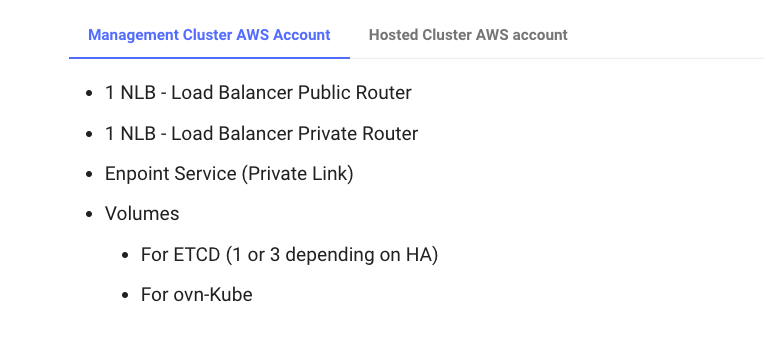
code sample:
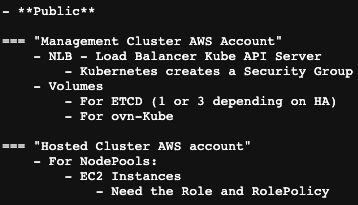
|
|
||
| A load balancer is required. If MetalLB is in use, here are some example steps | ||
| outlining how to configure MetalLB after [installing MetalLB](https://docs.openshift.com/container-platform/4.12/networking/metallb/metallb-operator-install.html). | ||
| If we access the cluster we will see we have two nodes and that there are some cluster operators failing because Ingress has not been properly configured. |
There was a problem hiding this comment.
s/If we access the cluster/If we access the Hosted Cluster/
| namespace: metallb-system | ||
| EOF | ||
| ``` | ||
| oc --kubeconfig $CLUSTER_NAME-kubeconfig get nodes |
There was a problem hiding this comment.
Could you clarify in the var name, which cluster are you referring to?
There was a problem hiding this comment.
This var is configured at the beginning of the scenario and does not change.
openshift-ci
bot
added
lgtm
mvazquezc
force-pushed
the
updated-kv-docs
branch
4 times, most recently
from
75b47fb to
a16a47d
Compare
|
I just squashed all three commits. I think this is now ready for a final review. Thanks. |
mvazquezc
requested review from
davidvossel and
jparrill
and removed request for
csrwng and
davidvossel
…e annotation

bee450b (ci-operator: expose ephemeral cluster versions based on
parents, 2020-08-11, openshift#1098) taught assembleReleaseStep to consume the
release.openshift.io/config annotation on an ImageStream to find a
version prefix that actually reflects the 4.y release branch (instead
of using 0.0.1-0 as the prefix).  Those annotations are set on the
app.ci ImageStreams, for example:

  $ oc whoami -c
  default/api-ci-l2s4-p1-openshiftapps-com:6443/wking
  $ oc -n ocp get -o json imagestream 4.13 | jq -r '.metadata.annotations["release.openshift.io/config"] | fromjson | .name'
  4.13.0-0.ci

But they are not set in ImageStreams contained within release images:

  $ oc adm release info -o json registry.ci.openshift.org/ocp/release:4.13.0-0.ci-2023-03-29-224346 | jq '.references | {kind, metadata}'
  {
    "kind": "ImageStream",
    "metadata": {
      "name": "4.13.0-0.ci-2023-03-29-224346",
      "creationTimestamp": "2023-03-29T22:52:54Z",
      "annotations": {
        "release.openshift.io/from-image-stream": "ocp/4.13-2023-03-29-224346"
      }
    }
  }

With this commit, I'm taking the name out of the imported release
ImageStream and trying to parse it as a Semantic Version.  If it
parses, I'm constructing a release.openshift.io/config annotation to
set just the 'name' property to the MAJOR.MINOR.PATCH from that parsed
name.  This should allow cluster-bot runs like:

  launch 4.13.0-0.ci,openshift/cluster-version-operator#918,openshift/hypershift#2318 hypershift-hosted

to build releases named 4.13.0-0-... instead of their current
0.0.1-0-...:

  $ curl -s https://gcsweb-ci.apps.ci.l2s4.p1.openshiftapps.com/gcs/origin-ci-test/logs/release-openshift-origin-installer-launch-hypershift-hosted/1641294936391290880/artifacts/release/artifacts/release-payload-latest/image-references | jq -r .metadata.name
  0.0.1-0.test-2023-03-30-043404-ci-ln-h9dwcbk-latest

which is failing to run with [1]:

  Release image is not valid: {
    "lastTransitionTime": "2023-03-30T04:36:29Z",
    "message": "releases before 4.8 are not supported",
    "observedGeneration": 3,
    "reason": "InvalidImage",
    "status": "False",
    "type": "ValidReleaseImage"
  }

[1]: https://prow.ci.openshift.org/view/gs/origin-ci-test/logs/release-openshift-origin-installer-launch-hypershift-hosted/1641294936391290880#1:build-log.txt%3A203-210
 davidvossel
left a comment
davidvossel
left a comment
davidvossel
left a comment
There was a problem hiding this comment.
looks great, i had a couple of suggestions
| ```shell | ||
| podman run --rm --privileged -it -v \ | ||
| $PWD:/output docker.io/library/golang:1.18 /bin/bash -c \ | ||
| 'git clone https://github.com/openshift/hypershift.git && \ | ||
| cd hypershift/ && \ | ||
| make hypershift && \ | ||
| mv bin/hypershift /output/hypershift' | ||
|
|
||
| sudo mv $PWD/hypershift /usr/local/bin | ||
| ``` | ||
| === "Podman" | ||
|
|
||
| ```shell | ||
| podman run --rm --privileged -it -v \ | ||
| $PWD:/output docker.io/library/golang:1.18 /bin/bash -c \ | ||
| 'git clone https://github.com/openshift/hypershift.git && \ | ||
| cd hypershift/ && \ | ||
| make hypershift && \ | ||
| mv bin/hypershift /output/hypershift' | ||
|
|
||
| sudo install -m 0755 -o root -g root $PWD/hypershift /usr/local/bin/hypershift | ||
| rm $PWD/hypershift | ||
| ``` | ||
|
|
||
| === "Docker" | ||
|
|
||
| ```shell | ||
| docker run --rm --privileged -it -v \ | ||
| $PWD:/output docker.io/library/golang:1.18 /bin/bash -c \ | ||
| 'git clone https://github.com/openshift/hypershift.git && \ | ||
| cd hypershift/ && \ | ||
| make hypershift && \ | ||
| mv bin/hypershift /output/hypershift' | ||
|
|
||
| sudo install -m 0755 -o root -g root $PWD/hypershift /usr/local/bin/hypershift | ||
| rm $PWD/hypershift | ||
| ``` |
There was a problem hiding this comment.
the podman and docker command are identical except for the use of podman or docker as the binary, right? If so I'd suggest documenting this just with podman, and saying the command is the same for docker.
| export CLUSTER_NAME=example | ||
| export HOSTEDCLUSTER_NAME=example |
There was a problem hiding this comment.
The reason we use CLUSTER_NAME instead of HOSTEDCLUSTER_NAME is that CLUSTER_NAME is consistent with documentation for all the other hypershift platforms. I'd prefer to remain consistent. So if we're going to change this env var, i'd want to change it across the board.
There was a problem hiding this comment.
Changed back to CLUSTER_NAME.
| ## Advanced Ingress and DNS | ||
|
|
||
| This process involves three steps. | ||
| Every OpenShift cluster comes setup with a default application ingress | ||
| controller which is expected have an external DNS record associated with it. | ||
|
|
||
| **Step 1. Cluster Creation** | ||
| For example, a HyperShift cluster named `example` with the base domain | ||
| `hypershift.lab` is created, then it is expected that the wildcard domain | ||
| `*.apps.example.hypershift.lab` can be resolved. | ||
|
|
||
| Create Hypershift KubeVirt cluster with a custom base domain you control. This | ||
| can be achieved using the `--base-domain` cli argument during cluster creation. | ||
| There are two ways to set this up: | ||
|
|
||
| Below is an example. | ||
| * Default: Reuse the management cluster's wildcard DNS routing and make the | ||
| Hypershift KubeVirt cluster a subdomain of the management cluster. This is what we have seen in the previous section. | ||
| * Advanced: Set up a new LoadBalancer service and wildcard DNS record for the HostedCluster `*.apps` domain. | ||
|
|
||
| ### Deploying the HostedCluster specifying our base domain |
There was a problem hiding this comment.
Previously we had a Default Ingress and DNS Behavior section which clearly outlined how ingress works out of the box. then we have a Customized Ingress and DNS Behavior which went into the details around how someone can set up their own basedomain. I'd like to keep those two sections.
Can the Default Ingress and DNS Behavior be re-introduced?
There was a problem hiding this comment.
Reintroduced and reworded some sections to match with the 3-steps proposed by the original doc:
- Cluster creation
- LoadBalancer creation
- Wildcard DNS configuration

@lahinson yes, i think it would make sense to update the official docs once these changes land. These changes definitely add further clarity to the procedures |

Signed-off-by: Mario Vazquez <mavazque@redhat.com>

Incorporated feedback

Signed-off-by: Mario Vazquez <mavazque@redhat.com>

Added Juan P. feedback

Signed-off-by: Mario Vazquez <mavazque@redhat.com>
mvazquezc
force-pushed
the
updated-kv-docs
branch
from
a16a47d to
51ba765
Compare
|
@davidvossel I just pushed some changes addressing your suggestions. Ready for review when you're back. |
davidvossel
left a comment
davidvossel
left a comment
There was a problem hiding this comment.
/lgtm
/approve
this is great! thanks for improving the docs
|
[APPROVALNOTIFIER] This PR is APPROVED This pull-request has been approved by: davidvossel, mvazquezc The full list of commands accepted by this bot can be found here. The pull request process is described here DetailsNeeds approval from an approver in each of these files:
Approvers can indicate their approval by writing |
openshift-ci
bot
added
the
approved
|
@mvazquezc: all tests passed! Full PR test history. Your PR dashboard. DetailsInstructions for interacting with me using PR comments are available here. If you have questions or suggestions related to my behavior, please file an issue against the kubernetes/test-infra repository. I understand the commands that are listed here. |

7 participants


What this PR does / why we need it:
It updates the kubevirt configuration as of the latest release (03/23/2023).
Checklist