inbounds for is_strictly_increasing #1325
Merged
Conversation
This file contains hidden or bidirectional Unicode text that may be interpreted or compiled differently than what appears below. To review, open the file in an editor that reveals hidden Unicode characters.
Learn more about bidirectional Unicode characters


joaquimg
approved these changes
May 9, 2021

Member
|
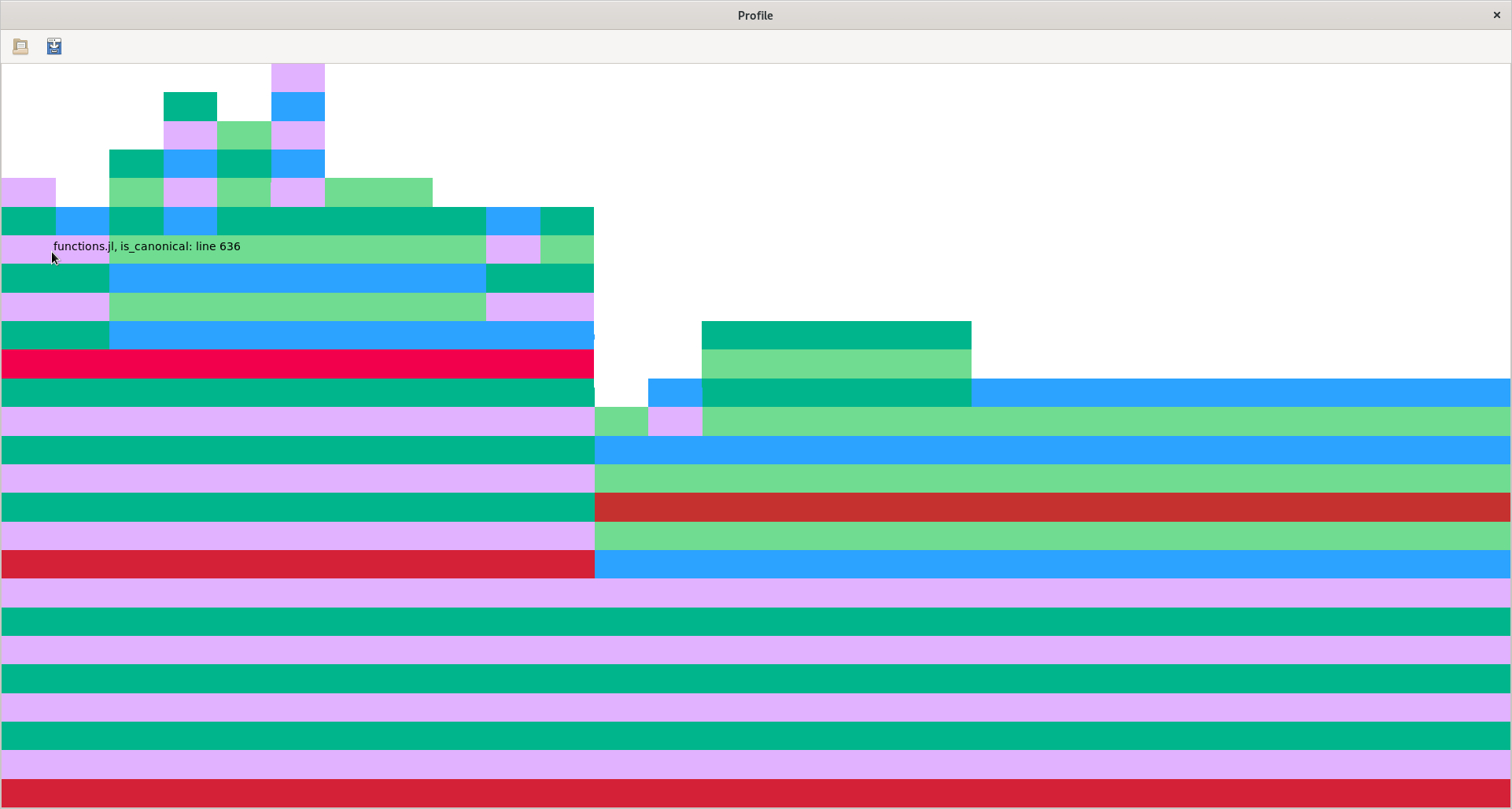
This seems to be proportional to the overall number of non-zeros, not just in one function. |

Member
|
Before After function MathOptInterface.Utilities.is_strictly_sorted(x::Vector, by, filter)
if isempty(x)
return true
end
current_x = first(x)
if !filter(current_x)
return false
end
current_fx = by(current_x)
@inbounds for i in eachindex(x)[2:end]
next_x = x[i]
if !filter(next_x)
return false
end
next_fx = by(next_x)
if next_fx <= current_fx
return false
end
current_x, current_fx = next_x, next_fx
end
return true
end |
Member
|
Actually this was better function MathOptInterface.Utilities.is_strictly_sorted(x::Vector, by, filter)
if isempty(x)
return true
end
@inbounds current_x = first(x)
if !filter(current_x)
return false
end
current_fx = by(current_x)
for i in eachindex(x)[2:end]
@inbounds next_x = x[i]
if !filter(next_x)
return false
end
next_fx = by(next_x)
if next_fx <= current_fx
return false
end
current_x, current_fx = next_x, next_fx
end
return true
endThere's too much noise with only 10k terms. |

Member
Author
|
This is the part of copying to |


blegat
added a commit
that referenced
this pull request
May 22, 2021
blegat
added a commit
that referenced
this pull request
May 22, 2021
blegat
added a commit
that referenced
this pull request
May 23, 2021
Sign up for free
to join this conversation on GitHub.
Already have an account?
Sign in to comment


Add this suggestion to a batch that can be applied as a single commit.
This suggestion is invalid because no changes were made to the code.
Suggestions cannot be applied while the pull request is closed.
Suggestions cannot be applied while viewing a subset of changes.
Only one suggestion per line can be applied in a batch.
Add this suggestion to a batch that can be applied as a single commit.
Applying suggestions on deleted lines is not supported.
You must change the existing code in this line in order to create a valid suggestion.
Outdated suggestions cannot be applied.
This suggestion has been applied or marked resolved.
Suggestions cannot be applied from pending reviews.
Suggestions cannot be applied on multi-line comments.
Suggestions cannot be applied while the pull request is queued to merge.
Suggestion cannot be applied right now. Please check back later.
As this is taking a non-negligeable time in #1287, it is worth optimizing.
Consider the benchmark:
Before:
Initial suggestion:
@odow improved implementation: