[APM] Refactor & scope aggregation types#48394
Conversation


 dgieselaar
added
v7.6.0
release_note:skip
dgieselaar
added
v7.6.0
release_note:skip

💚 Build Succeeded
|

There was a problem hiding this comment.
How does this work? Can it pass the options, and if restTotalHitsAsInt is true it will type the response accordingly? That's pretty cool 👍
One thing: Mostly restTotalHitsAsInt is written as rest_total_hits_as_int so maybe we should require it as such?
There was a problem hiding this comment.
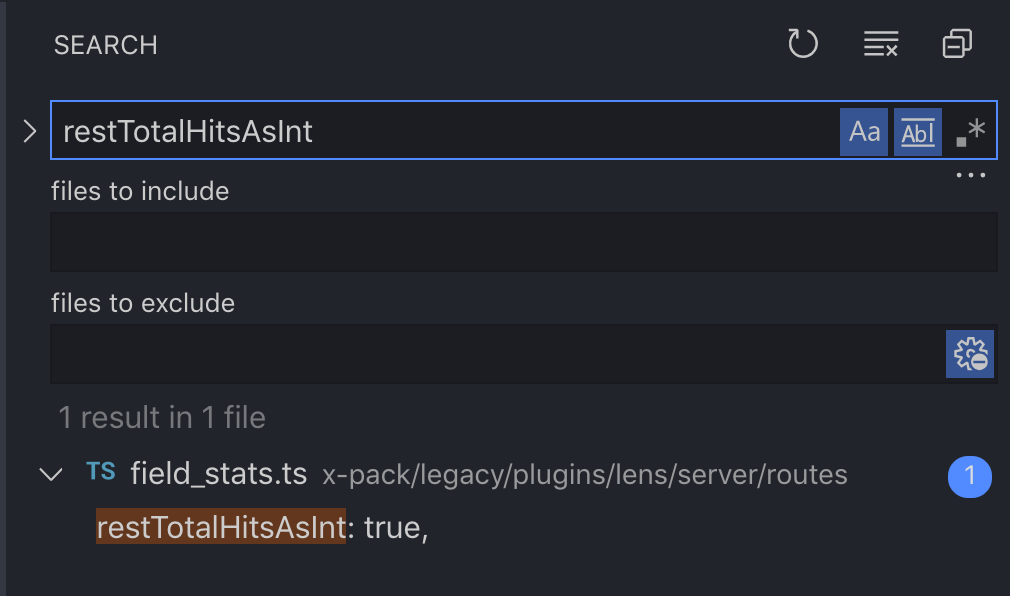
restTotalHitsAsInt is only used by Lens:
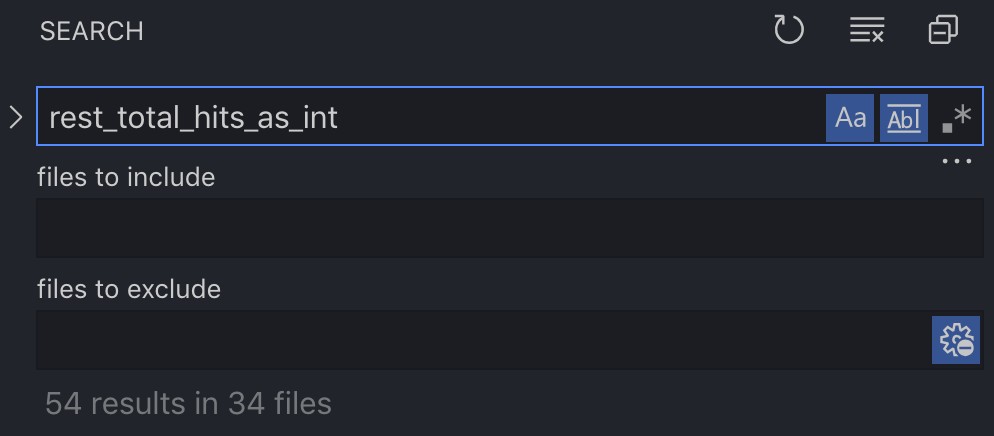
rest_total_hits_as_int is used 54 places
There was a problem hiding this comment.
I figured it would look kind of weird if we add more options. If we add something, for some reason, that does not have a query parameter equivalent, do we define it in snake_case then as well?
There was a problem hiding this comment.
The bigger issue here is not snake case, but it's that this type is really confusing in practice. I tried getting the elasticsearch-js client to improve typings in the way you're proposing here, but there are some strong caveats.
Here is a discussion I had with @delvedor: elastic/elasticsearch-js#970
Specifically, I've extended the playground example here to demonstrate why this is is so tricky
The biggest caveat here is that Response<{ rest_total_hits_as_int: true}> is not the same as
const request = { rest_total_hits_as_int: true };
Response<typeof request>;
For example, this type is totally valid, which I found unintuitive:
const f = { result: true };
const r: typeof f['result'] = false;
There was a problem hiding this comment.
I think TS automatically widens boolean and string literals to respectively booleans and strings. If you change that to { result: true as const }, it will show a TS error. You can replicate that in your playground example as well.
A type definition (rather than a type inferred from a value) does not have the same issue. true remains true, rather than being widened to boolean.
There was a problem hiding this comment.
Right, that's what I meant by "confusing in practice." That being said, this is optional and has the correct defaults. So I think this is fine.
 sorenlouv
left a comment
sorenlouv
left a comment
sorenlouv
left a comment
There was a problem hiding this comment.
This looks really good. Great work!
There was a problem hiding this comment.
Why is this change necessary? Doesn't idx always return T | undefined?
There was a problem hiding this comment.
Oh, terms bucket key type now accounts for the fact it can be both number and string. That's a little annoying we have to do this everywhere...
Why is this not necessary for serviceName: bucket.key ?
There was a problem hiding this comment.
Agree that it's a little annoying, but we could easily run into it ourselves, if we start aggregating on status code for instance. I thought this was an issue for the Lens plugin as well. I figured it would be best to just bite the bullet and have more correct types.
I think we're not using it in a way where it is necessary for it to be a string. Looks like it's used in a ManagedTable, which doesn't really care what type you pass to it. We're using it as a render property, but we have to explicitly type that anyway, so the issue never surfaces. I think it would be best to add a as string there as well.
There was a problem hiding this comment.
Yes, we also ran into this issue. We want to start making it easier to build Terms aggregations on dates.
💚 Build Succeeded
|

|
@wylieconlon given that you've worked with these types before, I've added you as a reviewer, I can imagine you would have some useful feedback. |

 wylieconlon
left a comment
wylieconlon
left a comment
wylieconlon
left a comment
There was a problem hiding this comment.
I really like these type definitions, but it's clear to me that they are broadly useful within Kibana- not just for APM or Lens, but also for any other use. I've previously talked with the Clients team and @delvedor about whether they have any appetite to help us maintain these, and the answer was that they could not guarantee their correctness over time. But instead of saying "these types are specific to APM" I feel pretty strongly that these should be maintained as helpful types that anyone developing typescript in Kibana can use.
I do like the core of this change, decoupling this from the elasticsearch types. This will make it easier to move all of this code into a top-level directory.
There was a problem hiding this comment.
For extended_bounds I'm not sure that both min and max are required- all the examples seem to set both, but is that really true in practice?
There was a problem hiding this comment.
You're right, neither of them are required, and they can be a string to. Will fix.
There was a problem hiding this comment.
| precision_treshold?: number; | |
| precision_threshold?: number; |
There was a problem hiding this comment.
As long as we're adding such strong request types, it bothers me that the types for filters here are any. You've already defined the ESFilter type below, and there is probably an extension for NamedEsFilter that can be used here
There was a problem hiding this comment.
I think it's mostly because I don't really trust the ESFilter type. We often have to explicitly type it (rather than TypeScript being able to infer it from the value), and the type of filters is so complicated that it seems like an entirely separate project (which I might give a shot at some point).
There was a problem hiding this comment.
Is there a reason you're not using the hits type?
There was a problem hiding this comment.
Just did not consider it, that's a great suggestion actually. I'll give it a shot.
There was a problem hiding this comment.
Thanks for adding this more accurate filters type!
There was a problem hiding this comment.
The bigger issue here is not snake case, but it's that this type is really confusing in practice. I tried getting the elasticsearch-js client to improve typings in the way you're proposing here, but there are some strong caveats.
Here is a discussion I had with @delvedor: elastic/elasticsearch-js#970
Specifically, I've extended the playground example here to demonstrate why this is is so tricky
The biggest caveat here is that Response<{ rest_total_hits_as_int: true}> is not the same as
const request = { rest_total_hits_as_int: true };
Response<typeof request>;
For example, this type is totally valid, which I found unintuitive:
const f = { result: true };
const r: typeof f['result'] = false;
|
@wylieconlon Thanks for the feedback, it's awesome. I do think it's worth having a discussion on how to scope these filters - a concern we had that our types would not be correct, or that correct types (that cover many use cases) would mean that the type fidelity would be so low that they would lose much of their value. I'll be off for a few days, but maybe we can discuss somewhere next week (I'm off for a few days) on how we can make this usable for others in Kibana. I'm pretty excited for others to start using this 👍 |
dgieselaar
force-pushed
the
refactor-aggregation-types
branch
from
9efe673 to
084af75
Compare
💚 Build Succeeded
|
wylieconlon
left a comment
wylieconlon
left a comment
There was a problem hiding this comment.
This is definitely the right direction, so I'm going to approve with the understanding that we will look for a directory where these type definitions can live outside of any specific plugin.
There was a problem hiding this comment.
Yes, we also ran into this issue. We want to start making it easier to build Terms aggregations on dates.
There was a problem hiding this comment.
Right, that's what I meant by "confusing in practice." That being said, this is optional and has the correct defaults. So I think this is fine.

Iterate on the APM aggregation types, make them more readable and explicitly scope them as APM-specific.

ES typings:
- Refactored aggregation types (mostly better naming, slightly less hacks)
- Do not add APM typings to `elasticsearch` module to explicitly scope them as APM specific
- Make restTotalHitsAsInt a type option rather than a separate type
- `terms` bucket key type now accounts for the fact it can be both number and string

`mergeProjection`:
- Type check arguments for compatibility with ESSearchRequest
- Require valid aggregation objects in source parameter. Seems less brittle, and surfaces errors closer to the source

Other changes:
- Sort options in some cases need `as const`, type casts or type guards
- Simplify types for metric aggregations
dgieselaar
force-pushed
the
refactor-aggregation-types
branch
from
084af75 to
7d0765e
Compare
💚 Build Succeeded |
* [APM] Refactor & scope aggregation types

Iterate on the APM aggregation types, make them more readable and explicitly scope them as APM-specific.

ES typings:
- Refactored aggregation types (mostly better naming, slightly less hacks)
- Do not add APM typings to `elasticsearch` module to explicitly scope them as APM specific
- Make restTotalHitsAsInt a type option rather than a separate type
- `terms` bucket key type now accounts for the fact it can be both number and string

`mergeProjection`:
- Type check arguments for compatibility with ESSearchRequest
- Require valid aggregation objects in source parameter. Seems less brittle, and surfaces errors closer to the source

Other changes:
- Sort options in some cases need `as const`, type casts or type guards
- Simplify types for metric aggregations

* Add type casts for bucket keys in remaining places

* Review feedback
4 participants


Iterate on the APM aggregation types, make them more readable and explicitly scope them as APM-specific.
ES typings:
elasticsearchmodule to explicitly scope them as APM specificrestTotalHitsAsInta type option rather than a separate typetermsbucket key type now accounts for the fact it can be both number and stringmergeProjection:ESSearchRequestOther changes:
as const, type casts or type guards