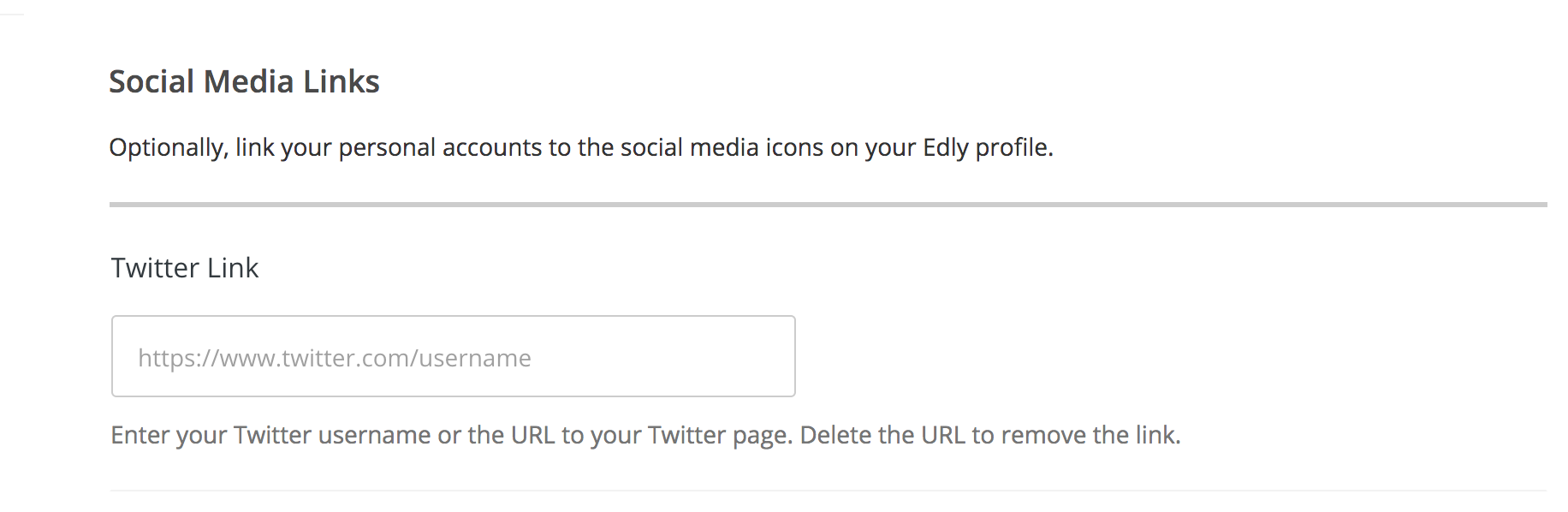
change delete account text for edly - #3
Merged
Conversation


Author
|
@ziafazal I couldn't find a way to override these javascript files. Thats why I had to make change in our own fork. |

etechdevai
approved these changes
Aug 2, 2019

arbirali
approved these changes
Aug 2, 2019
arbirali
pushed a commit
that referenced
this pull request
Jun 23, 2020

…from_edx_master

Add IdentityServer3 Backend from edX master
taimoor-ahmed-1
pushed a commit
that referenced
this pull request
Jun 22, 2026

Addresses PR review feedback on openedx#38773 (Faraz32123) — ADR 0036 decision #3
requires documenting minimal vs full response variants in OpenAPI. The
?view= and ?fields= query parameters were implemented in the original
commits but not declared on the @extend_schema / @apidocs.schema decorators,
so OpenAPI consumers (Swagger UI, generated SDK clients) couldn't discover
that the presets exist.

Three files affected:

* course_details.py (v3) — explicit comment target. Added module-level
  _VIEW_QUERY_PARAMETER (enum=["minimal"]) and _FIELDS_QUERY_PARAMETER
  OpenApiParameter constants and wired them into the retrieve() action's
  @extend_schema(parameters=...). Updated the 200 response description to
  note the shape varies when the presets are requested.

* home.py (v3) — added a ?fields= apidocs.string_parameter to the list
  action's @apidocs.schema. The courses / libraries actions return
  single-key dicts and are not in scope for ?fields=.

* enrollments/v2/views.py — added module-level _VIEW_QUERY_PARAM and wired
  it into the list action's @extend_schema. Updated the 200 description to
  note that course_details collapses to a course_id string when the preset
  is requested.

Xblock v1 has no @extend_schema decorator on the viewset at all (a
pre-existing gap not introduced by ADR 0036); adding a full schema there
is out of scope for this review fix. Tracked for a follow-up.

No code-behaviour changes — schema annotations only. The runtime
?view=minimal and ?fields= implementations were already correct.
taimoor-ahmed-1
pushed a commit
that referenced
this pull request
Jun 22, 2026
Adds an ADR 0036 entry to ``AuthoringGradingViewSet``'s compliance list.

Rationale: the v3 grading response is a single top-level ``graders``
list of small fixed-shape objects (type, min_count, drop_count,
short_label, weight, id) — no tree nesting, no embedded sub-objects,
no ``children`` field, no wide flat object. ``?view=minimal`` and
``?fields=`` would have no fields to drop; the only ADR 0036 concern
that applies is anti-pattern #3 (unbounded child list).

In practice each course has ≤8 graders (Homework, Lab, Exam, etc.)
and the update flow is exercised only by course-authoring staff,
so the real-world payload is always small. The hard cap is enforced
upstream by ``CourseGradingModel.update_from_json``; documented as a
note rather than re-implemented at the view layer.
taimoor-ahmed-1
pushed a commit
that referenced
this pull request
Jun 22, 2026
Addresses PR review feedback on openedx#38773 (Faraz32123) — ADR 0036 decision #3
requires documenting minimal vs full response variants in OpenAPI. The
?view= and ?fields= query parameters were implemented in the original
commits but not declared on the @extend_schema / @apidocs.schema decorators,
so OpenAPI consumers (Swagger UI, generated SDK clients) couldn't discover
that the presets exist.

Three files affected:

* course_details.py (v3) — explicit comment target. Added module-level
  _VIEW_QUERY_PARAMETER (enum=["minimal"]) and _FIELDS_QUERY_PARAMETER
  OpenApiParameter constants and wired them into the retrieve() action's
  @extend_schema(parameters=...). Updated the 200 response description to
  note the shape varies when the presets are requested.

* home.py (v3) — added a ?fields= apidocs.string_parameter to the list
  action's @apidocs.schema. The courses / libraries actions return
  single-key dicts and are not in scope for ?fields=.

* enrollments/v2/views.py — added module-level _VIEW_QUERY_PARAM and wired
  it into the list action's @extend_schema. Updated the 200 description to
  note that course_details collapses to a course_id string when the preset
  is requested.

Xblock v1 has no @extend_schema decorator on the viewset at all (a
pre-existing gap not introduced by ADR 0036); adding a full schema there
is out of scope for this review fix. Tracked for a follow-up.

No code-behaviour changes — schema annotations only. The runtime
?view=minimal and ?fields= implementations were already correct.
taimoor-ahmed-1
pushed a commit
that referenced
this pull request
Jun 22, 2026
Adds an ADR 0036 entry to ``AuthoringGradingViewSet``'s compliance list.

Rationale: the v3 grading response is a single top-level ``graders``
list of small fixed-shape objects (type, min_count, drop_count,
short_label, weight, id) — no tree nesting, no embedded sub-objects,
no ``children`` field, no wide flat object. ``?view=minimal`` and
``?fields=`` would have no fields to drop; the only ADR 0036 concern
that applies is anti-pattern #3 (unbounded child list).

In practice each course has ≤8 graders (Homework, Lab, Exam, etc.)
and the update flow is exercised only by course-authoring staff,
so the real-world payload is always small. The hard cap is enforced
upstream by ``CourseGradingModel.update_from_json``; documented as a
note rather than re-implemented at the view layer.
taimoor-ahmed-1
added a commit
that referenced
this pull request
Jul 1, 2026


…d APIs (openedx#38773)

* feat: apply ADR 0036 to Xblock v1 (?view=minimal)

Adds a ``?view=minimal`` query parameter on ``XblockViewSet.retrieve``
that filters the (tree-shaped) xblock response down to a small set of
structural fields — id, display_name, category, children, has_children,
studio_url — dropping heavy/contextual fields such as data, metadata,
fields, student_view_data, edited_on, published.

Default response shape is unchanged (full xblock payload) to avoid
breaking the existing Studio frontend. The pre-existing ``?fields=...``
query parameter retains its legacy "type of response" semantics
(?fields=graderType, ?fields=ancestorInfo, ?fields=customReadToken);
ADR 0036's CSV-subset interpretation is deferred to a future API
version to avoid breaking those callers.

Adds 4 regression tests covering: default response untouched, minimal
strips heavy fields, minimal keeps structural fields, minimal is a
no-op for non-dict response bodies (legacy ?fields=graderType path).

* feat: apply ADR 0036 to CourseHome v3 (?fields= on list action)

The v3 ``HomeViewSet.list`` action returns a wide ``StudioHomeSerializer``
payload with ~25 top-level keys (courses, archived_courses, libraries,
allowed_organizations, allowed_organizations_for_libraries, plus Studio
settings). Adds a ``?fields=`` query parameter so clients can request a
subset of those keys explicitly.

The flat-list ``courses`` and ``libraries`` actions are out of scope
(each returns a single-key dict wrapping a list of small items — no
nested or wide structure to filter).

Adds a shared ``apply_field_selection`` helper to ``v3/utils.py`` so
future v3 viewsets can opt into the same convention without
re-implementing it. Adds 2 regression tests: default keeps all keys,
``?fields=courses,libraries`` restricts to exactly those keys.

* docs: audit CourseHome v4 against ADR 0036 (out of scope)

Adds an ADR 0036 entry to ``HomeCoursesViewSet``'s compliance list
explicitly marking this endpoint as out of scope.

Rationale: the v4 home endpoint returns a flat paginated list
governed by ADR 0032 (DefaultPagination 7-field envelope). ADR 0036
excludes flat lists from its ``?view=`` / ``?depth=`` / minimal-by-default
requirements — those apply to tree-shaped responses or wide flat
objects with embedded sub-objects. Each course item is a thin 9-field
record with no nested children, no embedded sub-objects, and no tree
structure to bound.

Per-item ``?fields=`` subset filtering remains a possible follow-up
(would require a dynamic-fields serializer mixin and per-field schema
documentation) but is deferred to keep the v4 contract stable for the
existing Studio frontend.

* feat: apply ADR 0036 to Enrollment v2 (?view=minimal flattens course_details)

Each enrollment record returned by the v2 ``EnrollmentViewSet.list`` and
``EnrollmentRetrieveView.get`` actions embeds a full ``course_details``
sub-object (which itself includes a ``course_modes`` list and other
heavy course-overview fields). Server-to-server callers and AI agents
that only need to know which courses a user is enrolled in shouldn't
have to parse the embedded sub-object on every row.

Adds a ``?view=minimal`` query parameter on both actions that collapses
the embedded ``course_details`` to a single ``course_id`` string. The
enrollment-level fields (``created``, ``mode``, ``is_active``, ``user``)
are preserved. Default response shape is unchanged.

Adds 2 regression tests (mocked, MongoDB-free): default list keeps the
full shape, ``?view=minimal`` collapses each row's course_details to a
flat course_id and the heavy fields are dropped.

* feat: apply ADR 0036 to Course Detail v3 (?view=minimal + ?fields=)

The v3 ``CourseDetailsViewSet.retrieve`` action returns a wide
``CourseDetailsSerializer`` payload with ~40 top-level fields plus a
nested ``instructor_info`` sub-object (instructor names, bios, image
URLs) and a ``learning_info`` long-form list. The default full payload
is preserved; two new opt-in query parameters apply ADR 0036:

  * ``?view=minimal``  drops heavy fields (overview, syllabus,
    description, short_description, instructor_info, learning_info,
    banner_image_name / banner_image_asset_path, video_thumbnail
    assets, license) — leaving only identification (course_id, org,
    run, title, subtitle, language), schedule (start_date, end_date,
    enrollment_start, enrollment_end, certificate_available_date),
    and flags (self_paced, certificates_display_behavior, has_changes).

  * ``?fields=a,b,c``  keeps an explicit CSV subset of top-level keys.
    Composes with ``?view=minimal`` — the preset is applied first,
    then the explicit subset.

Reuses ``apply_field_selection`` from ``v3/utils.py`` (introduced in
the CourseHome v3 commit) so the convention is consistent across v3.

Adds 3 regression tests (mocked, MongoDB-free): default keeps all
fields, ?view=minimal drops the heavy/embedded ones and keeps
identification/schedule/flags, ?fields=course_id,title restricts to
exactly those keys.

* docs: audit AuthorGrading v3 against ADR 0036 (largely out of scope)

Adds an ADR 0036 entry to ``AuthoringGradingViewSet``'s compliance list.

Rationale: the v3 grading response is a single top-level ``graders``
list of small fixed-shape objects (type, min_count, drop_count,
short_label, weight, id) — no tree nesting, no embedded sub-objects,
no ``children`` field, no wide flat object. ``?view=minimal`` and
``?fields=`` would have no fields to drop; the only ADR 0036 concern
that applies is anti-pattern #3 (unbounded child list).

In practice each course has ≤8 graders (Homework, Lab, Exam, etc.)
and the update flow is exercised only by course-authoring staff,
so the real-world payload is always small. The hard cap is enforced
upstream by ``CourseGradingModel.update_from_json``; documented as a
note rather than re-implemented at the view layer.

Waleed-Mujahid
pushed a commit
that referenced
this pull request
Aug 7, 2026

…d APIs (openedx#38773)

* feat: apply ADR 0036 to Xblock v1 (?view=minimal)

Adds a ``?view=minimal`` query parameter on ``XblockViewSet.retrieve``
that filters the (tree-shaped) xblock response down to a small set of
structural fields — id, display_name, category, children, has_children,
studio_url — dropping heavy/contextual fields such as data, metadata,
fields, student_view_data, edited_on, published.

Default response shape is unchanged (full xblock payload) to avoid
breaking the existing Studio frontend. The pre-existing ``?fields=...``
query parameter retains its legacy "type of response" semantics
(?fields=graderType, ?fields=ancestorInfo, ?fields=customReadToken);
ADR 0036's CSV-subset interpretation is deferred to a future API
version to avoid breaking those callers.

Adds 4 regression tests covering: default response untouched, minimal
strips heavy fields, minimal keeps structural fields, minimal is a
no-op for non-dict response bodies (legacy ?fields=graderType path).

* feat: apply ADR 0036 to CourseHome v3 (?fields= on list action)

The v3 ``HomeViewSet.list`` action returns a wide ``StudioHomeSerializer``
payload with ~25 top-level keys (courses, archived_courses, libraries,
allowed_organizations, allowed_organizations_for_libraries, plus Studio
settings). Adds a ``?fields=`` query parameter so clients can request a
subset of those keys explicitly.

The flat-list ``courses`` and ``libraries`` actions are out of scope
(each returns a single-key dict wrapping a list of small items — no
nested or wide structure to filter).

Adds a shared ``apply_field_selection`` helper to ``v3/utils.py`` so
future v3 viewsets can opt into the same convention without
re-implementing it. Adds 2 regression tests: default keeps all keys,
``?fields=courses,libraries`` restricts to exactly those keys.

* docs: audit CourseHome v4 against ADR 0036 (out of scope)

Adds an ADR 0036 entry to ``HomeCoursesViewSet``'s compliance list
explicitly marking this endpoint as out of scope.

Rationale: the v4 home endpoint returns a flat paginated list
governed by ADR 0032 (DefaultPagination 7-field envelope). ADR 0036
excludes flat lists from its ``?view=`` / ``?depth=`` / minimal-by-default
requirements — those apply to tree-shaped responses or wide flat
objects with embedded sub-objects. Each course item is a thin 9-field
record with no nested children, no embedded sub-objects, and no tree
structure to bound.

Per-item ``?fields=`` subset filtering remains a possible follow-up
(would require a dynamic-fields serializer mixin and per-field schema
documentation) but is deferred to keep the v4 contract stable for the
existing Studio frontend.

* feat: apply ADR 0036 to Enrollment v2 (?view=minimal flattens course_details)

Each enrollment record returned by the v2 ``EnrollmentViewSet.list`` and
``EnrollmentRetrieveView.get`` actions embeds a full ``course_details``
sub-object (which itself includes a ``course_modes`` list and other
heavy course-overview fields). Server-to-server callers and AI agents
that only need to know which courses a user is enrolled in shouldn't
have to parse the embedded sub-object on every row.

Adds a ``?view=minimal`` query parameter on both actions that collapses
the embedded ``course_details`` to a single ``course_id`` string. The
enrollment-level fields (``created``, ``mode``, ``is_active``, ``user``)
are preserved. Default response shape is unchanged.

Adds 2 regression tests (mocked, MongoDB-free): default list keeps the
full shape, ``?view=minimal`` collapses each row's course_details to a
flat course_id and the heavy fields are dropped.

* feat: apply ADR 0036 to Course Detail v3 (?view=minimal + ?fields=)

The v3 ``CourseDetailsViewSet.retrieve`` action returns a wide
``CourseDetailsSerializer`` payload with ~40 top-level fields plus a
nested ``instructor_info`` sub-object (instructor names, bios, image
URLs) and a ``learning_info`` long-form list. The default full payload
is preserved; two new opt-in query parameters apply ADR 0036:

  * ``?view=minimal``  drops heavy fields (overview, syllabus,
    description, short_description, instructor_info, learning_info,
    banner_image_name / banner_image_asset_path, video_thumbnail
    assets, license) — leaving only identification (course_id, org,
    run, title, subtitle, language), schedule (start_date, end_date,
    enrollment_start, enrollment_end, certificate_available_date),
    and flags (self_paced, certificates_display_behavior, has_changes).

  * ``?fields=a,b,c``  keeps an explicit CSV subset of top-level keys.
    Composes with ``?view=minimal`` — the preset is applied first,
    then the explicit subset.

Reuses ``apply_field_selection`` from ``v3/utils.py`` (introduced in
the CourseHome v3 commit) so the convention is consistent across v3.

Adds 3 regression tests (mocked, MongoDB-free): default keeps all
fields, ?view=minimal drops the heavy/embedded ones and keeps
identification/schedule/flags, ?fields=course_id,title restricts to
exactly those keys.

* docs: audit AuthorGrading v3 against ADR 0036 (largely out of scope)

Adds an ADR 0036 entry to ``AuthoringGradingViewSet``'s compliance list.

Rationale: the v3 grading response is a single top-level ``graders``
list of small fixed-shape objects (type, min_count, drop_count,
short_label, weight, id) — no tree nesting, no embedded sub-objects,
no ``children`` field, no wide flat object. ``?view=minimal`` and
``?fields=`` would have no fields to drop; the only ADR 0036 concern
that applies is anti-pattern #3 (unbounded child list).

In practice each course has ≤8 graders (Homework, Lab, Exam, etc.)
and the update flow is exercised only by course-authoring staff,
so the real-world payload is always small. The hard cap is enforced
upstream by ``CourseGradingModel.update_from_json``; documented as a
note rather than re-implemented at the view layer.
This file contains hidden or bidirectional Unicode text that may be interpreted or compiled differently than what appears below. To review, open the file in an editor that reveals hidden Unicode characters.
Learn more about bidirectional Unicode characters
Sign up for free
to join this conversation on GitHub.
Already have an account?
Sign in to comment
3 participants


Add this suggestion to a batch that can be applied as a single commit.This suggestion is invalid because no changes were made to the code.Suggestions cannot be applied while the pull request is closed.Suggestions cannot be applied while viewing a subset of changes.Only one suggestion per line can be applied in a batch.Add this suggestion to a batch that can be applied as a single commit.Applying suggestions on deleted lines is not supported.You must change the existing code in this line in order to create a valid suggestion.Outdated suggestions cannot be applied.This suggestion has been applied or marked resolved.Suggestions cannot be applied from pending reviews.Suggestions cannot be applied on multi-line comments.Suggestions cannot be applied while the pull request is queued to merge.Suggestion cannot be applied right now. Please check back later.
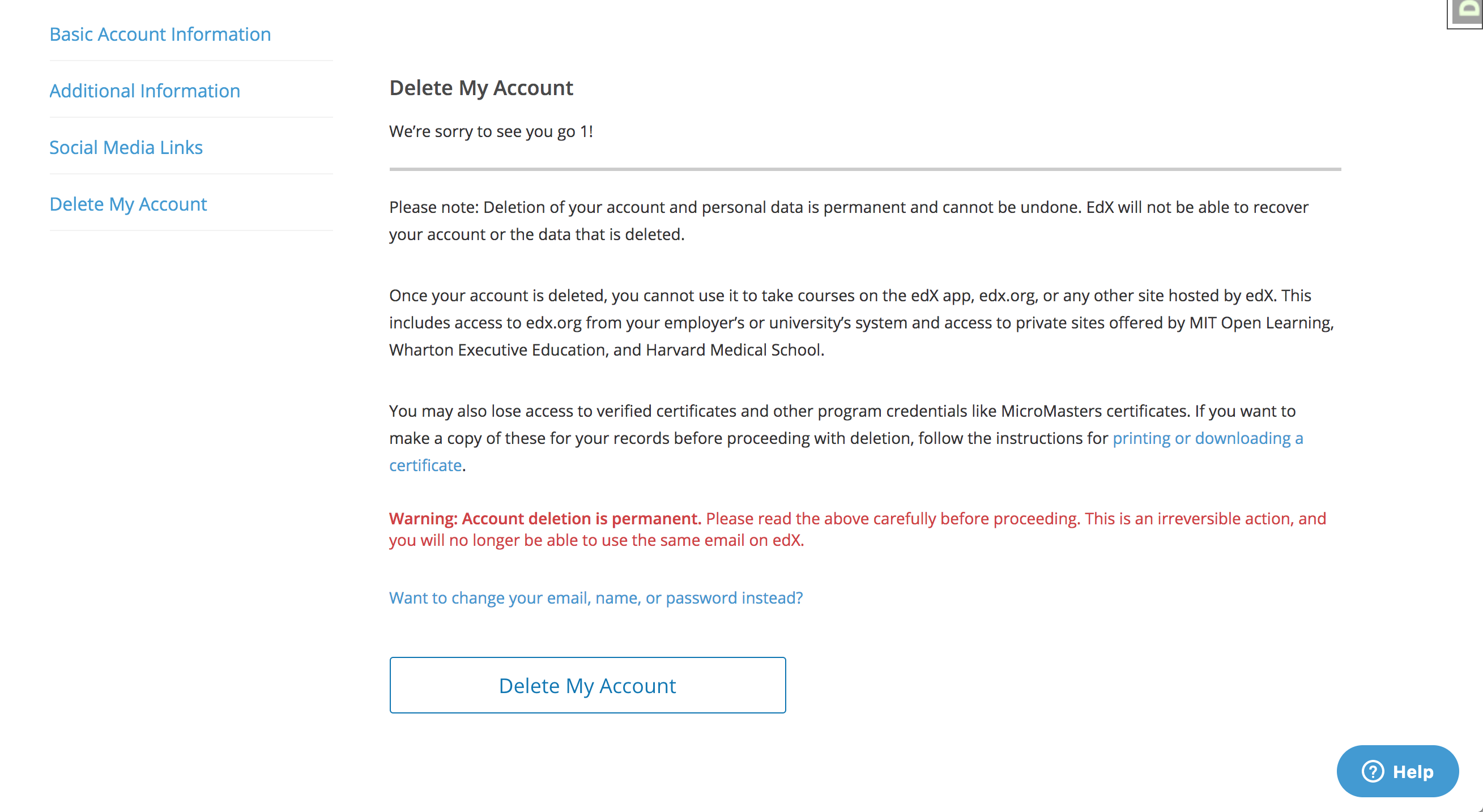
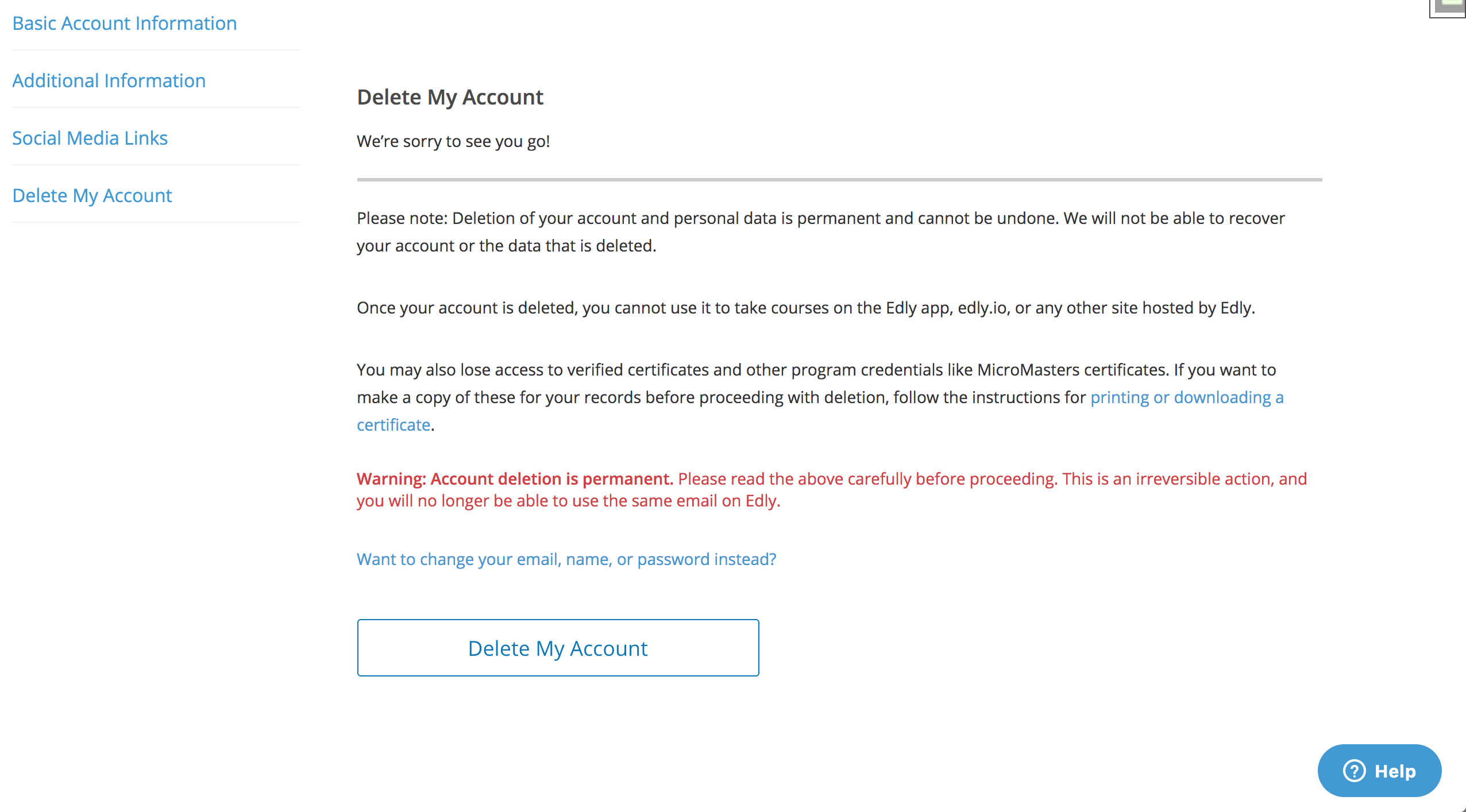
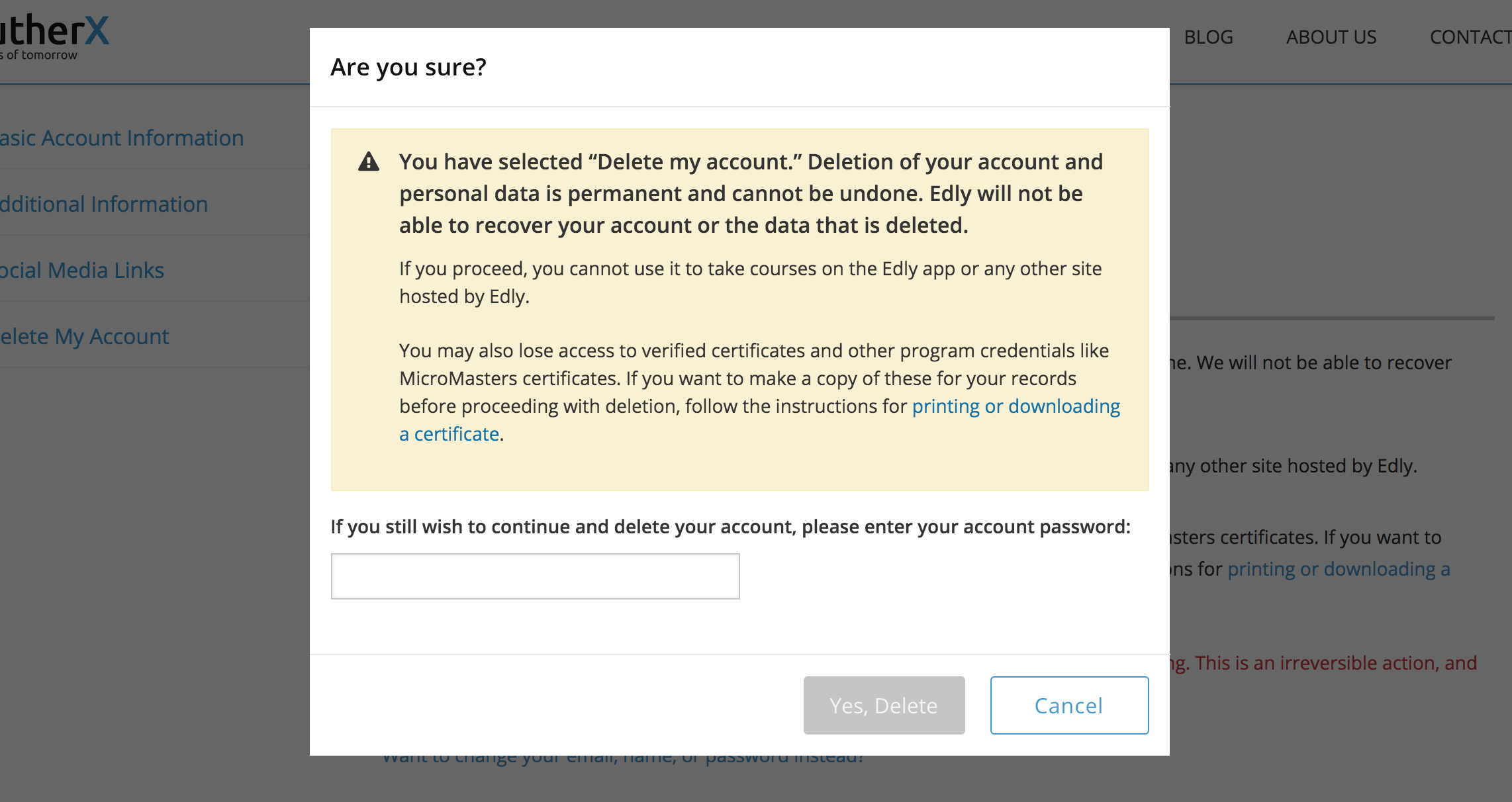
Replace the default delete account text for
EdlyAccount deletion section (before):

Account deletion section (after):
Social Media Links (before):
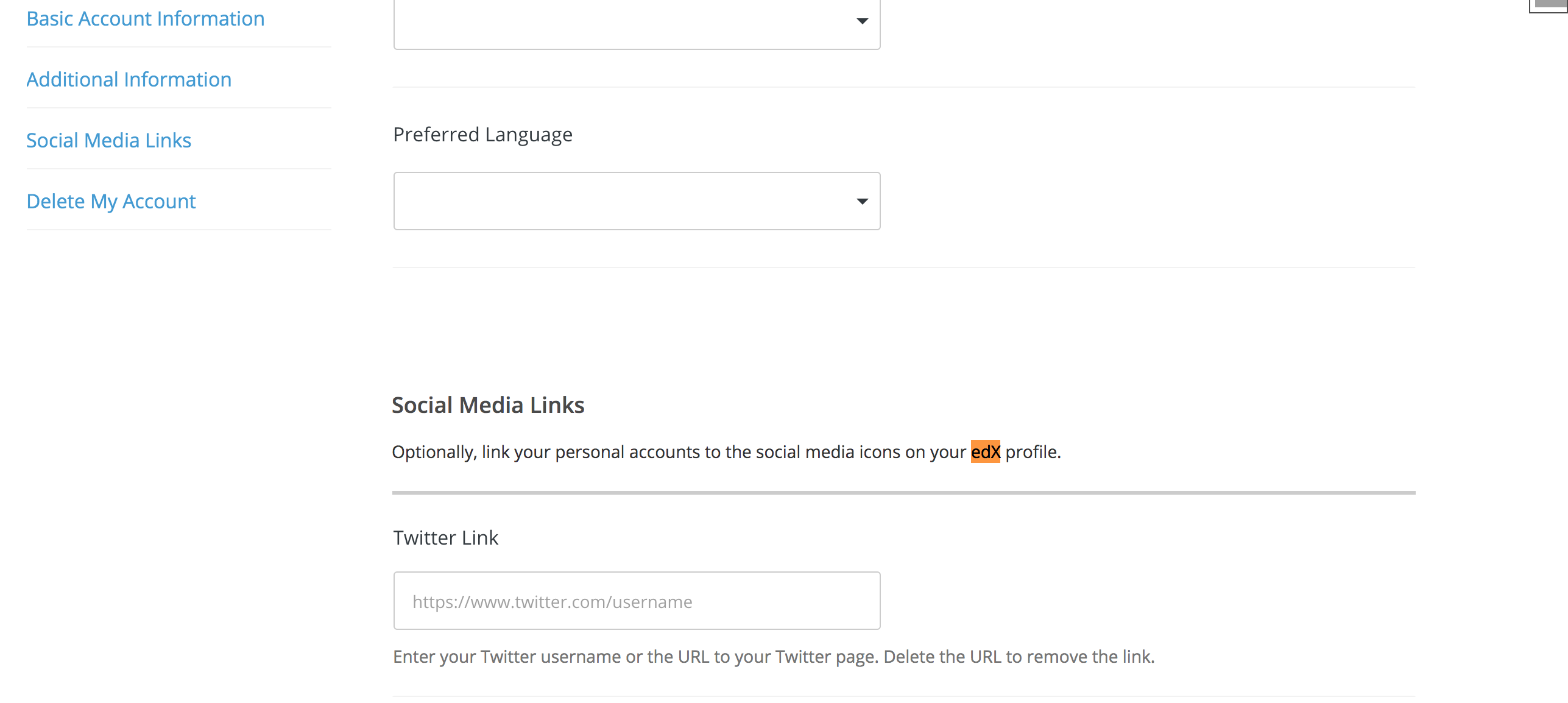
Social Media Links (after):